
Live Roulette in the UK with English-Speaking Dealers
 Available in GB

A practical guide to dealer-led roulette, table choices, bet types, real-money play and the limits of free games.
How Live Roulette Works Online
Live dealer roulette combines a streamed game in a studio with a betting interface on your screen. A human dealer spins a physical wheel in real time; you choose your bets through the online controls while watching the game unfold. The result comes from the ball’s landing place on that wheel, rather than from a computer generating a simulated spin.
That distinction is the defining feature of live play. The video is not simply an animation made to look like a casino table: it carries the action of a real wheel and dealer to your device. You see the game as it happens, while the interface provides the means to take part remotely. The table is physical; your betting area is digital.
What happens on screen
When you open a live table, the stream and the betting area appear together. The dealer operates the wheel in the studio, and the interface lets you select where to place your stake. You do not need to handle chips or stand at the table. Your choices are made on screen, while the dealer carries out the physical spin.
When choosing a UK live roulette table with English-speaking dealers, you may also want to consider how quickly withdrawals are paid. The details below give you the payout speed available for each listed operator.
1. SlotoSport
Payout speed: 1-3 business days SlotoSport lists a payout speed of 1–3 business days. You can use this as one practical detail when considering your options.
2. Revery Play
Payout speed: 1-3 business days Revery Play lists a payout speed of 1–3 business days. This gives you a stated timeframe to consider alongside your other preferences.
3. SpinFormula
Payout speed: 1-3 business days SpinFormula lists a payout speed of 1–3 business days. You have a published withdrawal timeframe to factor into your choice.
4. WinBeast
Payout speed: 1-3 business days WinBeast lists a payout speed of 1–3 business days. This is the available practical detail to consider when reviewing the operator.
5. BeOnBet
Payout speed: 1-3 business days BeOnBet lists a payout speed of 1–3 business days. You can take that stated timeframe into account when weighing your options.
6. x3bet
Payout speed: 1-3 business days x3bet lists a payout speed of 1–3 business days. This gives you a stated withdrawal timeframe to bear in mind.
7. Jetsetspins
Payout speed: 1-3 business days Jetsetspins lists a payout speed of 1–3 business days. You can consider this timeframe as part of your decision.
8. Dieselwin
Payout speed: 1-3 business days Dieselwin lists a payout speed of 1–3 business days. That is the available detail to help you assess its practical fit.
9. Chanze
Payout speed: 1-3 business days Chanze lists a payout speed of 1–3 business days. You have a stated withdrawal timeframe to consider.
10. EvoSpin
Payout speed: 1-3 business days EvoSpin lists a payout speed of 1–3 business days. You can use this timeframe as one factor when considering the operator.
The sequence is straightforward at its core: you make selections in the interface, the dealer spins the wheel, and the ball comes to rest in a pocket. The outcome is tied to that landing. The stream lets you follow the real-world action behind the result; it does not turn the game into a face-to-face visit to a casino.
The on-screen controls are therefore part of the game, not just decoration around the video. They are how you communicate your selections to the table. The dealer does not need to see you or receive physical chips from you. Instead, the live feed and digital controls connect the studio action with your remote participation.
Live play and computer-generated roulette
A computer-generated roulette game works differently. It uses a Random Number Generator, or RNG, to produce the result. Its wheel and ball may be displayed as graphics, but the outcome is generated by software rather than by a dealer spinning a physical wheel.
In live dealer roulette, by contrast, the result follows the ball on the streamed wheel. The distinction is not simply whether a game looks realistic. A polished animation can resemble a casino table without showing a physical game. To identify the live format, look for the dealer and wheel being streamed as the spin takes place.
Hi-Lo Casino UK: Rules, Payouts and Online Play
Neither format should be mistaken for a way to know what the next result will be. In live play, you can watch the wheel; in an RNG game, you see a digital presentation. The way the result is produced differs, but watching a stream does not tell you where the ball will land.
Your role as a remote player
Playing remotely means making decisions through controls rather than placing chips by hand. You select your intended bets in the interface, and the game presents the wheel and dealer through a live video feed. The screen joins those two parts: one displays the physical game, and the other records your choices.
That arrangement can feel more immediate than watching a computer-rendered wheel, because the dealer and the physical spin are visible in real time. But it remains an online experience. You are not controlling the wheel, and the stream does not give you influence over how the ball moves. Your participation is limited to the choices available through the betting interface.
Monopoly Live Casino UK: How Live Play Works
If you are comparing a roulette online casino with a live table, this production method is the clearest starting point. A live dealer table shows a human dealer spinning a physical wheel; a computerised game uses an RNG. The label and presentation matter less than that underlying difference.
The interface also means you should pay attention to what you select before submitting a choice. The video is where you watch the dealer and wheel; the betting controls are where you take part. Keeping those functions distinct makes the format easier to understand, especially if you are new to live tables.
Live play, then, is a digital connection to a physical roulette game, not a digital recreation of one. You watch the dealer spin in real time and use on-screen controls to place bets. The wheel is real. The seat is not.
Roulette Tables in a UK Casino
A roulette table is the setting for a game built around a numbered wheel, a ball and a marked betting area. In a casino, the layout gives each number and betting position a defined place; the wheel supplies the result, while the layout records what players have selected. The arrangement may appear on a physical table or as an interface around a live dealer game, but its purpose is the same: to connect a player’s selection with where the ball comes to rest.
That basic connection is what makes roulette recognisable. The ball lands on a number, and a player wins when they selected that number. The table is therefore more than a decorative casino backdrop. It is the visible structure that lets a player make a selection and follow the result. It also gives the dealer and players a shared reference point during the game.
In a live dealer setting, the table is part of a real-time casino presentation, with a human dealer and a physical wheel. It may be available alongside other casino games, but roulette remains its own game with its own table and outcome. A roulette casino can refer to a venue or an online casino offering roulette; the key distinction for you is whether you are viewing a live dealer table or another format. The table name alone does not establish how the game is presented.
Live Dream Catcher Casino UK: How It Works
What the table tells you
The wheel and betting area work together. The wheel determines the number on which the ball stops; the betting area shows the selections available to players. A dealer oversees the live table, while players make their selections through the casino’s playing interface. This gives the game a visible sequence: selections are made, the wheel is spun, and the result is shown.
A table also sets the context for how you take part. In a live dealer casino, you are not simply looking at a number produced in isolation: you are watching a real table in operation. That can make the experience feel closer to a casino floor, although the presence of a live dealer does not change the central aim of roulette. The selected number still has to match the number where the ball lands.
The table should not be confused with a guarantee about what will happen next. Its markings organise the game; they do not predict the result. A roulette table can look elaborate, but the essential question remains straightforward: which number did you select, and where did the ball stop? Neat layout. Random outcome.
The UK licensing condition
For players in the UK, a live dealer casino must hold a UK Gambling Commission licence to offer gambling legally. Remote operators serving the British market are required to hold the relevant Commission licence, whether they operate from within the country or elsewhere. A live studio or a polished table presentation does not replace that requirement: the operator’s licence is a separate condition of providing the service.
This matters because “casino” can describe the style of a site as well as the games it offers. A page may show roulette tables and dealers, but the appearance of the product alone does not establish that it is legally available to UK players. The licensing condition applies to the operator offering the gambling, not just to the studio, wheel or individual table.
Licensing
Remote operators serving the British market must hold a UK Gambling Commission licence to offer gambling legally.
The distinction is practical. When you encounter a UK roulette casino, treat the table as the game environment and the operator’s UK Gambling Commission licence as the legal basis for offering it. Those are related parts of the experience, but they answer different questions: the table shows how roulette is presented; the licence determines whether the operator is authorised to serve the market.
Choosing a Roulette Casino Site by the Details That Matter
A live table can look polished and still be a poor fit if you cannot follow the dealer, read the controls or keep the stream running smoothly. Compare roulette casino sites on those practical points rather than treating presentation alone as a measure of quality. The best live roulette casino site for you is the one that meets your needs across the details that affect your session.
Check the dealer’s language and audio
If you want an English-speaking dealer, confirm that the specific table is presented in English. Do not assume every table at one site uses the same language. Listen to the dealer’s speech, and check that it is clear enough for you to follow alongside the on-screen prompts. Muffled audio or a language you do not understand can make an otherwise straightforward session harder to follow.
Look at how the table communicates actions and timing as well. Clear visual prompts can help you keep track when you miss a spoken instruction, but they should support the stream, not replace it. A site’s general description is less useful than checking the actual table before you commit to playing.
Read the table information before joining
The table view should make its rules and relevant information easy to locate. Take a moment to find them before joining, rather than relying on a promotional description or assuming that all tables work in the same way. If the rules are difficult to find, or the display leaves an important point unclear, choose a table whose information is easier to inspect.
This is a useful comparison criterion because a familiar-looking interface does not tell you everything about a particular table. Check the on-screen labels and controls, too: you should be able to tell what you are selecting and see the result of your action. Clarity matters more than decorative animation.
Do
- Confirm the specific table is presented in English
- Find and read the rules before joining
- Check that on-screen labels are clear
Don’t
- Assume every table at one site uses the same language
- Rely on promotional descriptions for rules
- Prioritize decorative animation over clarity
Test the stream on your connection
Live dealer roulette depends on a stable internet connection. A stream that repeatedly pauses or loses clarity can make it difficult to follow what is happening in real time. If possible, open the table and watch it before deciding whether the experience is suitable. Notice whether the picture and sound remain steady, and whether the controls respond reliably while the stream is running.
A connection that handles ordinary browsing may still struggle with continuous video. If the table keeps buffering, changing sites may not solve the problem; the connection itself may be the limiting factor. Better to find that out before settling into a session.
Compare sites against the same checklist
A simple comparison keeps the decision grounded:
| Criterion | What to look for |
|---|---|
| Dealer language | The specific table is presented in English, and the speech is clear to you |
| Table information | Rules and on-screen controls are easy to find and understand |
| Stream | Video and audio remain steady on your connection |
| UK status | The operator holds the relevant UK Gambling Commission licence |
Remote gambling operators serving the British market must hold a Gambling Commission licence, wherever they are based. Checking that status is part of assessing a roulette casino site in the UK, not a substitute for checking whether its table suits you.
There is no single winner for every player: language clarity may matter most to you, while someone else may prioritise a steady stream or easily located rules. Compare those criteria directly instead of relying on a broad “top” label. This content is for entertainment purposes only and is not gambling advice.
Which Roulette Table Suits You: European or American?
The clearest difference between European and American Roulette is the wheel layout. European Roulette has one green pocket, marked 0. American Roulette has two: 0 and 00. That extra pocket changes the chance of a winning result, so the choice is more than a matter of table graphics.
On a European wheel, the stated odds of winning are 1 in 37. On an American wheel, they are 1 in 38. The American version’s additional pocket means there is one more possible result to account for. If your main criterion is the better chance of a win, European Roulette has the advantage.
| Feature | European Roulette | American Roulette |
|---|---|---|
| Green pockets | 0 | 0 and 00 |
| Stated odds of winning | 1 in 37 | 1 in 38 |
Why the extra pocket matters
A roulette result is determined by where the ball lands. With a single green pocket, the European layout has fewer possible results than the American layout, which includes both zero and double zero. The stated odds reflect that difference: the European figure is 1 in 37, while the American figure is 1 in 38.
This comparison is about the chance of a winning result, not a promise about what will happen in a particular spin. A more favourable set of odds does not make a win predictable. It simply means the European layout gives you the better chance when the two versions are compared on this measure.
The double zero is not a second label for the same pocket. It is an additional numbered position on the American wheel and appears on its table layout too. When checking a table, make sure you can identify whether it has 0 alone or both 0 and 00. The felt can look familiar, but that small detail changes the comparison.
Which version fits your preference?
Choose European Roulette if you want the version with one green pocket and the stronger stated odds of winning. Choose American Roulette if you prefer its layout and are comfortable with the extra double-zero result and the less favourable odds. There is no need to treat the choice as a judgement about which table is universally best: the deciding criterion is whether you prioritise the better chance or prefer the American format.
If the table name is not clear, look at the wheel or betting layout before joining. One green pocket marked 0 indicates European Roulette; green pockets marked 0 and 00 indicate American Roulette. Checking the layout is more reliable than assuming two tables with similar names follow the same version.
The difference is easy to miss if you focus only on the betting controls. For comparing these variants, count the green pockets first, then compare the stated odds. By that measure, European Roulette comes out ahead. American Roulette remains a distinct option, but its extra pocket has a measurable cost in the chance of a winning result.
European Roulette has one green pocket (0), while American Roulette has two (0 and 00), resulting in a better chance of a win for the European version.
Neither layout changes the basic fact that the ball’s landing position determines the result. The comparison gives you a way to choose between the versions; it does not turn roulette into a predictable game. European has the edge. The layout explains why.
Roulette Bets, Payout Logic and the House Edge
The basic aim in roulette is to choose where you think the ball will land. Once the result is announced, a bet wins if it covers the winning number; otherwise, the stake on that bet is lost. The table layout groups possible selections so you can choose a single number or a broader outcome. Those choices change how many results can make your bet win, but they do not change the way the ball’s result is determined.
A straight-up bet selects one number. It is the narrowest kind of selection: only that number produces a win. Other bets cover more than one possible result, so a greater range of outcomes can qualify. The payout shown for a bet reflects what it covers and how rarely that selection is expected to win. Check the table’s rules and paytable before placing a bet; the displayed terms tell you what a winning selection returns.
The payout is not the same as the house edge. A payout tells you what happens to a particular winning bet. The house edge describes the casino’s mathematical advantage across play over time. It is a measure of expected cost, not a prediction that a particular spin will lose or that a particular session will end in profit.
Live Blackjack Online Casinos in the UK: Table Guide
For roulette, the stated house edge is 2.9% on a straight-up bet and 2.7% on other bets. The difference is small, but it is a useful comparison when you are deciding between bet types. On that measure, the other bets have the lower edge. That does not mean they are automatically the better choice for you: a wider selection can win more often while paying less when it does, whereas a straight-up selection is harder to hit but has a different payout. The edge gives you a way to compare expected cost, not a way to forecast the next result.
These figures describe the mathematical relationship between the available outcomes and the payout rules. They do not mean that the casino takes that share from every individual stake, nor that every player’s results will track the percentage over a short spell. A run of outcomes can fall either way. The house edge becomes meaningful across repeated play, rather than acting as a fee applied visibly to each spin.
A practical comparison should therefore separate three questions: what outcomes a bet covers, what the paytable returns if it wins, and what house edge applies to it. Looking at only the potential payout can make a narrow bet seem more attractive than it is; looking only at the edge can hide the difference in how broadly a bet covers the layout. Neither measure promises a result.
The choice is about trade-offs, not a system for controlling the game. You can select a bet that matches your preference for a narrower or broader outcome, but no selection makes a future ball landing more predictable. Roulette remains random from spin to spin. The maths is steady; the results are not.
This explanation is for entertainment purposes only, not gambling advice. If you play, decide what you are comfortable spending before you begin and stop when you reach that limit.
House Edge Facts
- The house edge is a measure of expected cost over time, not a prediction for a single spin
- Straight-up bets carry a 2.9% edge
- Other bets carry a lower edge of 2.7%
- No selection makes a future ball landing more predictable
Playing Live Roulette for Real Money: Pace, Limits and Budget
A live roulette session asks more of your time and connection than a digital game. The dealer runs the physical table in real time, so each round follows the pace of the studio rather than resolving as quickly as a computer-generated game. If you want rapid play, that slower rhythm may feel restrictive. If you prefer to follow a live table, it is part of the format.
Your internet connection matters throughout the session. A stable connection helps you keep up with the live stream and use the betting interface while a round is in progress. If the stream freezes or becomes unreliable, continuing to place real-money bets is a poor plan: pause and reconnect before playing on.
Minimum stakes also deserve attention before you join a table. Live games can have higher minimum bets than digital versions, but the amount depends on the table. A specialist review reports that many live roulette and baccarat tables start at approximately 20p; this is a reported figure, not a guarantee of the limit at any particular table. Blackjack tables are described in the same review as often having higher starting limits. Check the displayed minimum for the roulette table you intend to play rather than treating a reported starting point as a promise.
The practical test is whether the table’s minimum fits your budget and whether you can afford to stay within that budget at the slower pace of live play. Set a spending limit before opening a real-money session, then stop when you reach it. Do not increase it to recover losses or extend a session because the game is moving slowly. A firm limit is more useful than a plan that changes once you are playing.
Online Casino Tournaments UK: How Slot Play Works
Before you join, weigh three details: the table minimum, the time you are willing to spend, and the reliability of your connection. A lower minimum matters most if you are keeping your stake small; pace matters if you have limited time; connection quality matters if you need the stream to remain usable. There is no single table choice that suits everyone.
If the live format feels too slow or its minimum sits above your chosen budget, digital roulette may be a more practical fit. The trade-off is straightforward: live play offers a real-time table, but it requires patience, a stable connection and a stake that works for you. Decide those limits before the first bet.
Free Roulette Play: What It Can and Cannot Show You
A free roulette game can help you get used to placing bets on screen before you decide whether to play for money. It is an introduction to the interface, not a way to earn or withdraw winnings. Any balance shown in a free game is for play within that mode; it does not represent money you can cash out.
If the free option uses a live dealer table, you can follow the sequence of a streamed game while making selections through the on-screen controls. That can make it easier to understand where to place a bet and how the interface responds. A free computerised game can also familiarise you with its controls, but it uses a Random Number Generator rather than showing a dealer spin a physical wheel. The formats are not interchangeable.
Before Real-Money Play
- Explore the layout using a free game
- Confirm if the free mode is actually a live dealer table
- Read the displayed rules for the specific table
- Understand how to navigate the on-screen controls
What free play is useful for
Use a free roulette game to explore the layout at your own pace. You can see how selections appear on the table display and learn how to navigate the controls without staking real money. If you are considering a live table, check that the free mode is actually live: a computer-generated version will not show you the same dealer-led sequence.
Free play can also give you time to read the table’s displayed rules and understand what the interface presents before making a decision. It does not establish that a real-money session will feel identical. The live stream, pace and table conditions belong to the particular game you choose, so treat the free mode as a familiarisation tool rather than a guarantee of the experience to come.
What it cannot tell you
A free game does not provide real payouts, and results in that mode do not promise anything about later spins. Nor does practice change the underlying game or turn a roulette casino edge into a player advantage. It shows you how to interact with that version of the game; it does not make outcomes predictable.
The distinction matters when comparing free roulette in the UK with real-money play. The introductory mode is for learning the controls and observing the game sequence. Real-money play brings financial decisions that a free balance cannot reproduce. Keep those purposes separate.
Before switching modes, read the rules shown for the table you intend to use. The name of a variant alone is not enough to establish its specific conditions; the displayed rules are the useful reference. If the free option is unavailable, do not assume that a real-money table offers a practice mode as well. Free play is useful for orientation. Nothing more.
Deal or No Deal Casino UK: Game Format and Offers
Roulette Bonuses: Check the Terms Before You Opt In
A roulette casino bonus can look relevant because it appears alongside a live table, but the promotion and the game are not necessarily connected. A specialist review reports that most UK welcome offers are free spins for slots, which cannot be used at live tables. Treat that as a reported pattern, not a rule for every offer: the terms for the specific promotion decide what you can play.
Even when live roulette is eligible, it may count for only a small share of the wagering requirement. One stated example is 10% weighting. That means roulette play may contribute less towards clearing the requirement than the headline bonus amount suggests. Check the game-weighting section before opting in, and look for the exact contribution assigned to live games. If the terms exclude live roulette, the promotion will not help fund that session.
The same check matters for a no-deposit offer. The label alone does not tell you whether live roulette is eligible, whether the offer applies only to selected games, or what conditions attach to any winnings. Read the promotion’s full terms rather than assuming that “no deposit” means unrestricted play.
Before accepting a roulette casino welcome bonus, check three things:
- Eligible games: Is live roulette included, or is the offer limited to slots or other games?
- Wagering requirements and game weighting: How much does eligible roulette play contribute, and what must be completed before the offer is cleared?
- Maximum bet conditions: Does the offer set a maximum stake while its requirements are active?
These are promotion conditions, not roulette table rules. A table’s own paytable and betting rules tell you how play works; a bonus’s terms tell you whether that play qualifies and under what conditions. Keep the two separate.
If the offer is mainly slot free spins, or live roulette has a low contribution, compare the promotion with what you actually intend to play. The headline value is not the useful measure; eligibility and weighting are. If either is unclear, do not opt in until you can confirm the terms. A bonus that cannot be used at your chosen table adds paperwork, not value.
Can You Improve Your Chances at Roulette?
There is no reliable method to make roulette produce a win on demand. You can choose how to stake, but that does not control where the ball lands. A staking pattern may change the size and timing of wins or losses; it cannot remove the house edge or make future spins predictable.
Attention: Staking patterns may change the size and timing of wins or losses, but they cannot remove the house edge or make future spins predictable.
The house edge is the mathematical cost built into the game. Straight-up bets carry a 2.9% edge, while other bets carry a 2.7% edge. The difference is modest, so choosing a bet because it appears more selective or dramatic does not turn it into a dependable way to win. No bet type guarantees a return.
French Roulette offers a specific exception on even-money bets. If you have bet on an even-money outcome and the ball lands on zero, you lose only half your stake rather than the whole amount. That rule reduces the loss in that particular situation; it does not make zero less likely to appear, nor does it alter the randomness of the next spin.
That distinction matters when looking for the best way to win roulette in a casino or online. A rule can improve the treatment of one losing result without changing the underlying sequence of results. A previous run of reds, a long gap since a number appeared, or a personal staking system does not provide a dependable signal about what comes next.
If you play, treat any win as an uncertain outcome, not something a system can secure. Choose a stake you are prepared to lose and stop within the budget you set. Do not increase stakes to recover losses or extend play because you are ahead. The practical advantage of the French rule is narrow but real: on an even-money bet, zero costs less. It is not a route to winning every time.
Crazy Time Live Casino Game Show in the UK
Lightning Roulette: Check the Rules Before You Play
The name alone does not tell you how a particular Lightning Roulette table works. Before joining a live casino game, open its rules and paytable and read the details for that table, rather than relying on descriptions elsewhere or assumptions based on the title.
Check how the game accepts bets, how a spin is settled and what the paytable says about each available outcome. If the rules describe any special feature, find out exactly when it applies and how it affects a bet. Do not assume that a feature changes every wager or that a headline payout applies to every winning number. The table’s own wording is the useful reference.
This matters whether you are looking at a Lightning Roulette casino in the UK or browsing several live casino options. A casino may present the game prominently, but the name does not replace the rules. If the paytable is difficult to locate, unclear about an outcome, or inconsistent with the information shown at the table, pause rather than guessing.
Treat “Lightning Roulette slots” as a separate search phrase, not as evidence that a roulette table works like a slot game. The label does not establish its mechanics, payout conditions or relationship to any other game. Read the rules for the specific table you intend to play.
A quick check should answer a simple question: do you understand what must happen for your selected bet to win, and what the paytable says you would receive? If not, do not place the bet until the wording is clear. That is a more useful test than choosing a table because its name sounds familiar.
This is general entertainment information, not gambling advice.
Is the house edge the same at live dealer casinos online?
No. In roulette, straight-up bets have a 2.9% house edge, while other bets have a 2.7% edge.
What are the different types of roulette you can play with a live dealer?
Live roulette can include European, American and French Roulette. Their rules and wheel layouts differ.
How do you choose a live dealer casino?
Choose a casino that holds a UK Gambling Commission licence. Check the table’s minimum bet and make sure your internet connection is stable, as live games tend to run more slowly than digital versions.
What is the difference between European and American Roulette?
American Roulette has both a 0 and a 00 pocket, while European Roulette has only 0. The odds of winning are 1 in 38 in American Roulette and 1 in 37 in European Roulette.
Which single rule has the biggest effect on house edge?
The number of zero pockets matters: American Roulette’s extra 00 pocket gives it worse odds than European Roulette.
Wildies Live Casino: Dealers, Tables and Mobile Play

Best Live Casino UK: Rules, Games and Site Checks
Live tables pair a dealer video stream with online controls, while licensing, game rules and...

Crazy Time Live Casino Game Show in the UK
Live dealer games pair a real-time studio stream with digital betting controls, while casino choice...

Deal or No Deal Casino UK: Game Format and Offers
Briefcase choices shape the offer sequence, while accepting a known amount differs from keeping the...
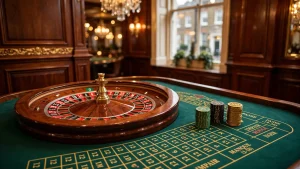
French Roulette Online Casinos in the UK: Rules & Tables
Compare French rules, table limits, live options and bonus terms, including how zero affects even-money...

Hi-Lo Casino UK: Rules, Payouts and Online Play
Hi-Lo compares the next card with a reference card, while rules and pay tables shape...

Live Baccarat Online Casinos in the UK: What to Check
A practical guide to UK operator checks, live-table access, baccarat rules, real-money terms and bonus...

Live Blackjack Online Casinos in the UK: Table Guide
Live blackjack combines a real-time dealer stream with digital controls, while table rules and optional...

Live Casino Lightning Roulette in the UK: What to Check
A practical guide to operator checks, the live format, roulette rules, offers and the difference...

Live Dream Catcher Casino UK: How It Works
A live Dream Catcher game combines a studio broadcast with on-screen controls for choosing and...

Monopoly Live Casino UK: How Live Play Works
A practical guide to live studio sessions, betting interfaces, roulette formats, basic bets and checking...

Online American Roulette in the UK: Rules and Odds
American roulette has separate 0 and 00 outcomes, affecting the wheel’s possible results and the...
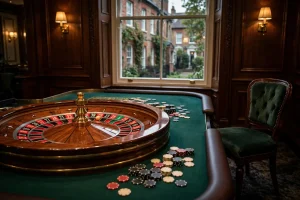
Online European Roulette in the UK: Odds and Play
A practical guide to single-zero odds, roulette bets and payouts, table formats, and how free...

Online Casino Tournaments UK: How Slot Play Works
Tournament formats can differ in how you enter, how much you can play and how...